
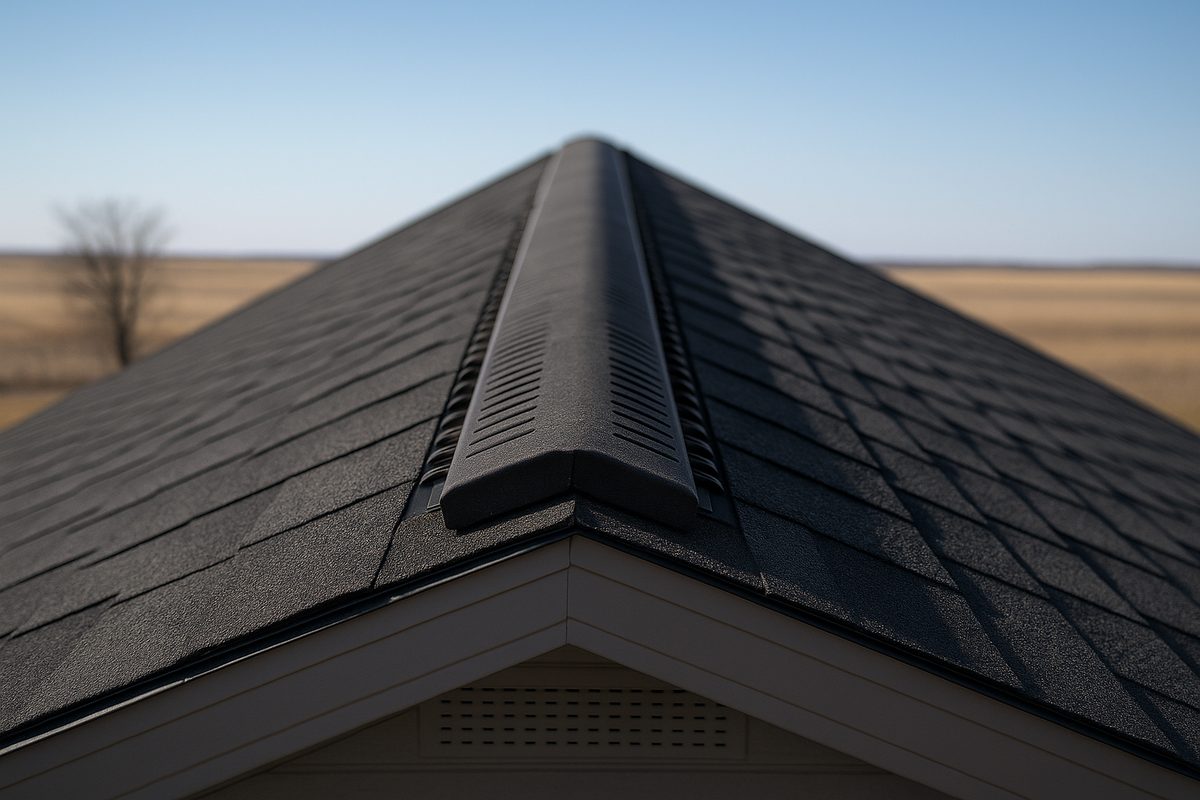
Roof Ventilation in Edmonton
Getting air moving through the attic properly, which does more for a roof's lifespan here than any shingle upgrade.
Ventilation is the least visible part of a roof and the part that most determines how long it lasts, so Edmonton Roof Pros assesses it on every roof we quote. A shingle ages from above by UV and from below by heat, and an attic that cannot breathe delivers a steady supply of the second one.
Through an Edmonton winter it does something worse. Humid indoor air pools against the sheathing, thaws the snowpack resting above it, and feeds that water downhill to the overhang, which stays at outdoor temperature because no heated room sits under it. The water refreezes there, builds a ridge of ice, and backs up under shingle courses designed only to shed water downhill.
How the System Is Meant to Work
Outside air should come in low along the eaves, sweep up beneath the sheathing collecting warmth and moisture as it climbs, and leave near the peak. That circulation keeps the deck close to outdoor temperature, which is exactly what you want in winter, and it flushes summer heat that would otherwise cook the shingles from beneath.
The critical word is balanced. Intake and exhaust have to be roughly matched. An attic with plenty of ridge exhaust and blocked soffits cannot pull air from the soffits, so it pulls it from the path of least resistance instead, which is frequently gaps around light fixtures, plumbing stacks and the attic hatch. Now the ventilation system is actively drawing heated, humid indoor air into the attic, and the problem it was installed to solve gets worse.
What We Actually Find
Blocked soffit vents are the most common fault by a wide margin. Blown-in insulation gets pushed out over the top plate at the eaves and seals the intake from inside. From the street the soffit vents look perfect. From inside the attic there is no air path at all. Baffles fix it, holding an open channel from soffit to attic while letting insulation stay where it is needed.
Mixed exhaust types are next. A house with both a ridge vent and box vents can have the ridge pulling air from the box vents instead of from the soffits, which leaves whole sections of the attic dead. Consolidating on one exhaust strategy usually improves things immediately.
Then exhaust fans from bathrooms and kitchens dumping into the attic instead of through to daylight. A single bathroom fan pumps a remarkable volume of warm wet air, and putting it into the attic will frost the sheathing over one winter. Those get ducted through to an exterior termination.
Why It Gets Corrected During a Replacement
The right time to fix ventilation is while the roof is off, when the deck is exposed, the soffits are accessible and exhaust vents are being installed anyway. Doing it then is a small line on the estimate. Doing it later means going back onto a new roof and cutting into it.
Every roof replacement we price includes the assessment, and any correction appears as its own line instead of disappearing into the total. Putting a new roof over an attic that cannot breathe buys you the same failure on the same timeline, at full price, twice.
If ice damming is your immediate problem, ice dam removal deals with the symptom and the cause. If you want to know where you stand, a roof inspection includes the attic assessment.
What's Included
- Intake and exhaust assessed as a balanced system
- Blocked soffit vents cleared and baffles installed
- Ridge, box and mechanical exhaust options
- Bathroom and kitchen fans vented outside, not into the attic
- Correction included as part of any replacement we quote
Other Services We Offer in Edmonton
Roof Ventilation Questions
What are the warning signs of a badly vented attic?
Look for frost or beaded condensation on the sheathing underside during winter, rust blooming on protruding nail points, ice building at the eaves, and an attic that is stifling on a summer afternoon. After the fact, a roof that wore out years early with no storm to blame tells the same story.
Is more ventilation always better?
No, and this is the most common misunderstanding. Ventilation works as a balanced system with intake low at the soffits and exhaust high at the ridge. Adding exhaust without matching intake makes the roof pull air from wherever it can find it, which is often the heated house below, which makes the moisture problem worse rather than better.
Will better ventilation stop my ice dams?
It addresses the main cause, together with attic insulation and air sealing. Damming starts when warmth leaking upward thaws the snowpack over the heated part of the roof, and that runoff hardens again once it crosses onto the unheated overhang. Keep the attic cold and the snow does not melt in the first place.
Can you mix ridge vents and box vents?
Better not to. Two different exhaust types at different heights can short-circuit each other, with the higher one drawing air from the lower one instead of from the soffits, leaving parts of the attic unventilated. Pick one exhaust strategy and pair it with adequate intake.
My soffits have vents but the attic is still stuffy. Why?
Usually because insulation has been blown over the top of them at the eaves, sealing them off from inside. It is extremely common, invisible from outside, and fixed with baffles that hold a clear air channel from the soffit up into the attic.
Get a Free Roof Ventilation Quote
Book a free quote. We will tell you which one it is, in writing, before you spend anything.