
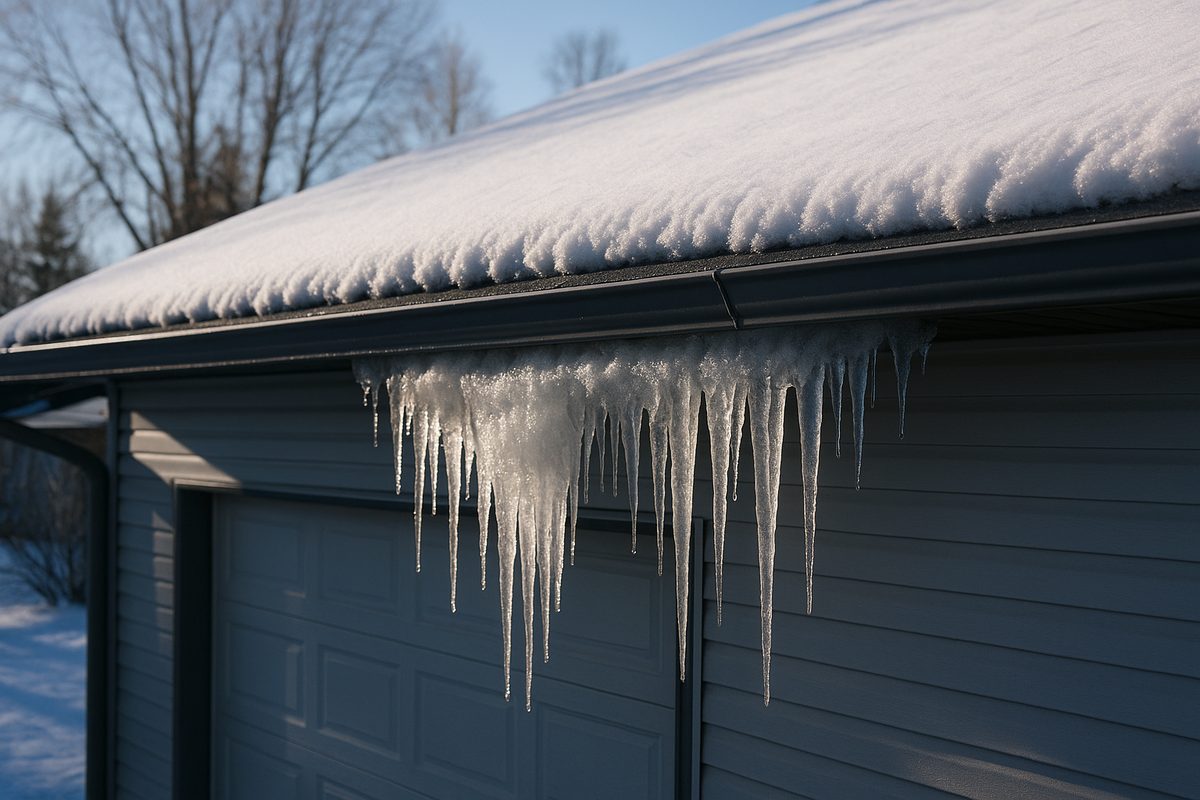
Ice Dam Removal in Edmonton
Steam removal that does not damage the roof, and an honest account of the attic problem causing the ice in the first place.
An ice dam is a ridge of ice at the edge of a roof that stops meltwater draining, and it is one of the more common winter calls Edmonton Roof Pros takes. Water pools behind it, finds its way under the shingle courses, and enters the house. By the time there is a stain on a ceiling, water has usually been in the roof assembly for some time.
The important thing to understand is that an ice dam is a heat problem wearing a roofing costume. The roof is not failing. It is being asked to hold standing water, which no shingle roof is designed to do.
How They Form
Snow sits across the whole roof. Heat escaping from the house warms the deck under the upper part of the roof, and the snow there melts from underneath. The meltwater tracks downhill until it crosses onto the overhang, which sits past the heated walls and holds outdoor temperature. That is where it turns back to ice.
Repeat over several days and the ice at the eave builds into a dam. Meltwater arriving from above now has nowhere to go, so it pools behind the ice, works sideways and upward under the shingles, and reaches the deck. Shingles shed water travelling downhill. They do nothing at all about water sitting still.
This is why the eave membrane we install during a roof replacement matters so much in this climate. It is the layer specifically there for the day water gets behind the dam.
Removing It Safely
We use low-pressure steam. Steam melts the ice free without impact, so the shingles, the eave membrane, the flashing and the eavestroughs come through it undamaged. We cut channels through the dam first so trapped water can drain immediately, which stops the water entering the house while the rest of the removal proceeds.
What we will not do is chip. Chipping ice off a roof with any kind of tool tears shingles, punctures the membrane underneath and wrecks eavestroughs, and the damage is often worse than what the ice was doing. If a contractor arrives at an ice dam with a hammer, send them away.
We also will not pressure wash. A pressure washer strips granules off shingles and drives water under the courses, and it is a genuinely destructive way to move ice.
While we are there, we look at where water has already got into the building, because the interior damage frequently needs attention even after the roof stops leaking.
Stopping the Next One
Removal buys you this winter. Not getting another dam means making the attic cold, which comes down to three things.
Air sealing first. Gaps around light fixtures, plumbing penetrations, the attic hatch and top plates let heated indoor air straight into the attic, and that air carries far more heat than conduction through insulation does.
Insulation second. Adequate and evenly distributed, with no thin spots over the areas where dams keep forming.
Ventilation third, and it has to be balanced. Intake at the soffits, exhaust at the ridge, with the soffit vents actually clear rather than buried under blown-in insulation. Our roof ventilation page covers how the system works and what usually goes wrong with it.
Get those right and the snow on your roof stays snow. That is the actual fix, and the best time to do it is during a re-roof, when the deck is open and the soffits are accessible.
What's Included
- Low-pressure steam removal, never chipping or hacking
- Channels cut through the dam so meltwater can escape
- Attic assessment to find the heat loss causing it
- Ventilation and air-sealing corrections
- Interior water entry addressed at the same time
Other Services We Offer in Edmonton
Ice Dam Removal Questions
Why does my house get ice dams when my neighbour's does not?
Almost always attic heat loss, not roof design. Warm air escaping from the house melts snow on the upper roof, and the meltwater refreezes when it reaches the cold overhang. A neighbour with better insulation, better air sealing or better ventilation keeps their attic cold, so their snow does not melt in the first place.
Can I chip the ice off myself?
Please do not. Chipping with an axe, hammer or garden tool damages shingles, tears the eave membrane and frequently damages eavestroughs, and doing it from a ladder on ice is how people get seriously hurt. It also does not solve anything, because the dam reforms within days if the cause is untouched.
What about salt or ice-melt tablets?
Chloride products corrode metal flashing, eavestroughs and fasteners, and can stain the roof and damage plantings below the eave. They may buy a channel through a small dam temporarily, but they are not a treatment for the roof and they cost you elsewhere.
Does steam damage the shingles?
Not when it is done properly. Steam removal uses low pressure and heat rather than force, so it melts the ice free without impact on the roof surface. It is not the same as a pressure washer, which absolutely does damage shingles and must never be used for this.
If you remove the dam, will it come back?
Yes, if nothing changes in the attic. Removal is the emergency measure that stops water entering now. Preventing the next one means addressing insulation, air leaks and ventilation, and that work is best done before the following winter rather than during it.
Get a Free Ice Dam Removal Quote
Book a free quote. We will tell you which one it is, in writing, before you spend anything.