
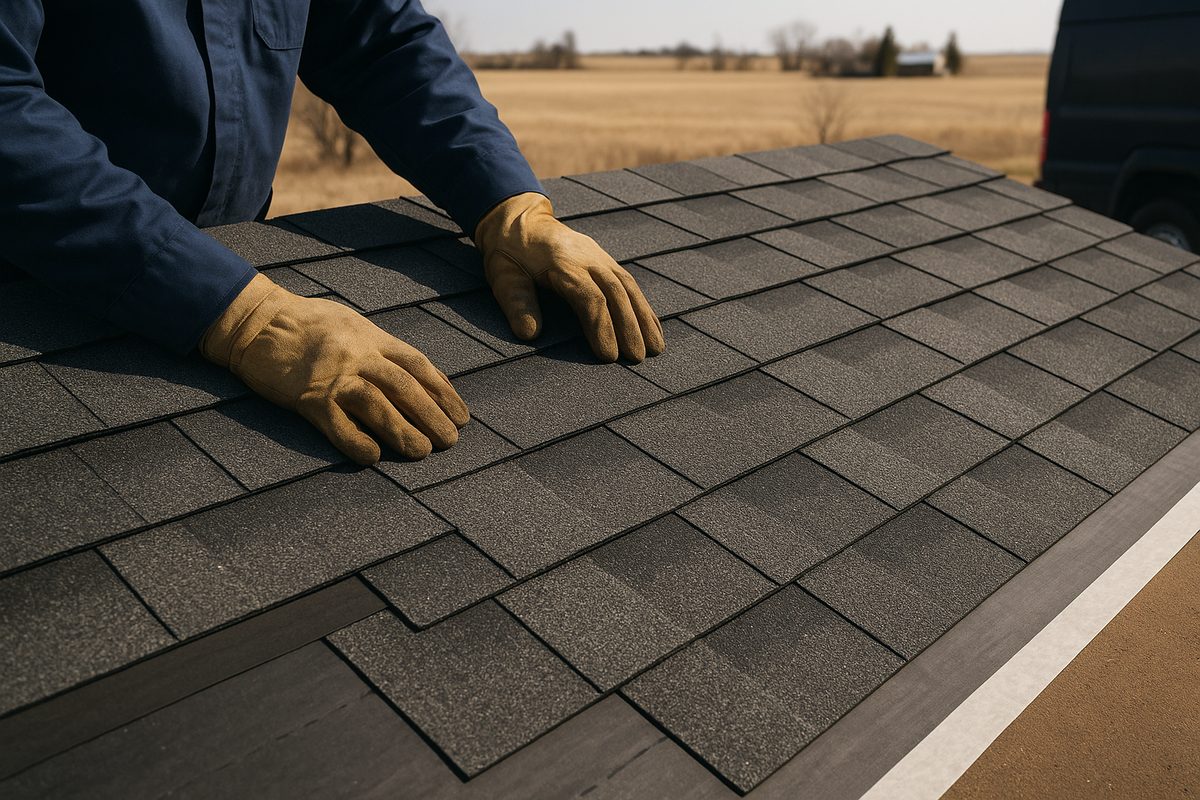
Asphalt Shingle Roofing in Edmonton
The material most Edmonton homes are re-roofed in, installed with the details that decide whether it reaches its rated life.
Asphalt shingles cover the large majority of houses in Edmonton, and there is nothing second-rate about that. Edmonton Roof Pros fits more of them than anything else, for good reason. The price-to-lifespan ratio is genuinely hard to beat, modern laminate products handle wind and impact far better than the three-tab roofs that shaped people’s opinions decades ago, and repairs are straightforward for whoever owns the house next.
What separates a shingle roof that reaches its rated life from one that fails a decade early is almost never the brand on the bundle. It is the deck it was nailed to, the underlayment beneath it, the flashing around it, and whether the attic underneath can breathe.
The Assembly, Bottom to Top
The deck comes first. Once the old roof is off we walk the entire surface, replace anything soft, delaminated or split, and itemise it. Sheathing that has been quietly taking water at a valley for a few winters will not hold a nail properly, and a nail that does not hold is where the next wind event starts.
Ice and water membrane goes down at the eaves, in the valleys, and around every penetration. This is the layer that matters most in an Edmonton winter, because it is what stands between an ice dam and your ceiling when meltwater backs up under the shingle courses. Synthetic underlayment covers the rest of the field — lighter, stronger and far more tear-resistant than traditional felt, and it does not wrinkle when it gets damp before the shingles go on.
Then starter courses at the eaves and rakes, the shingle field with the manufacturer’s specified nailing pattern, and new flashing at every wall, stack and chimney. Nailing pattern is worth naming because it is the most common shortcut in the trade: nails placed high, above the reinforced nailing strip, hold in the single laminate layer instead of both. The roof looks identical from the ground and it lets go in the first serious wind.
Impact Ratings and Hail
Edmonton sits in a hail corridor, so impact resistance is a live question here in a way it is not in most of the country. Class 4 is the top rating in the standard impact test, and in practice a Class 4 product tends to bruise less and hold its granules better through the storms this city gets.
It is not armour. A severe enough stone will damage any asphalt roof. But if you are already choosing between products at similar price points, the impact-rated one is usually the better bet locally, and it is worth asking your insurer whether they recognise it. Our hail damage roof repair page covers what impact damage actually looks like once it has happened.
Ventilation Decides the Lifespan
A shingle ages from the top by UV and from underneath by heat. If the attic cannot exhaust warm air, the deck runs hot, and the shingles above it cook from the back — the roof reaches the end of its life years before the wrapper suggested, and it will not be obvious why.
The same trapped warmth is what melts snow on the upper roof in February and refreezes it at the cold eave. So both halves of the airflow path, low at the eaves and high at the peak, are measured and put right while the roof is open. See roof ventilation for how the balance is meant to work.
If You Are Comparing Quotes
Ask what underlayment is included, how far up the eaves the membrane runs, whether flashing is being renewed or reused, what the deck repair allowance is, and what the nailing pattern is. Those five answers explain most of the gap between two quotes on the same house.
We put all of it in writing. Book a free quote, or start with a roof inspection if you are not yet sure the roof needs doing at all.
What's Included
- Architectural laminate shingles as standard, not three-tab
- Impact-rated Class 4 products available for hail exposure
- Synthetic underlayment and eave membrane, not felt alone
- Manufacturer-specified nailing pattern and starter courses
- Ventilation balanced so the shingles reach their rated life
Other Services We Offer in Edmonton
Asphalt Shingle Roofing Questions
How long does a 30-year shingle really last in Edmonton?
Less than thirty years, in almost every case. That number comes from controlled testing, not from a prairie roof cycling above and below freezing all winter and taking hail most summers. Twenty to twenty-five years is realistic for a well ventilated Edmonton roof. A poorly ventilated one can be finished years earlier, which is why airflow gets priced into the job instead of sold separately.
What is the life expectancy of Class 4 shingles?
Class 4 is an impact rating, not a lifespan rating. It means the shingle survived a standardised steel-ball impact test without the mat fracturing. In a hail-exposed city that resistance often translates into a longer real-world life than the same manufacturer's standard product, and some insurers recognise it. It does not make a roof hail-proof.
What is the difference between three-tab and architectural shingles?
Three-tab is a single flat layer with cutouts. Architectural shingles laminate two layers together, which makes them heavier, more wind-resistant, and considerably better at hiding an imperfect deck. The price difference is modest and the performance difference is not, so we fit architectural as standard.
What colour roof is best here?
Colour affects attic temperature far less than ventilation does, so choose what suits the house. The practical consideration in this climate is that mid-tone and darker shingles hide the staining that comes from years of freeze-thaw and organic debris better than very light ones do.
Do you have to remove the old shingles first?
On our jobs, yes. Going over the old roof hides deck damage, adds weight, traps heat that ages the new shingles early, and costs more to remove next time. A tear-off is the only way to know what you are nailing into.
Get a Free Asphalt Shingle Roofing Quote
Book a free quote. We will tell you which one it is, in writing, before you spend anything.