
Emergency Roof Repair in Edmonton
Stopping active water entry after storm or wind damage, then coming back to repair it properly.
Some roof problems can wait for a scheduled appointment. Water actively entering the building is not one of them, and it is the call Edmonton Roof Pros puts ahead of scheduled work. Wind that strips shingles off an exposed slope, a tree limb through the deck, or flashing torn loose in a storm all leave the house open, and the damage compounds every hour it stays that way.
First Priority Is Stopping the Water
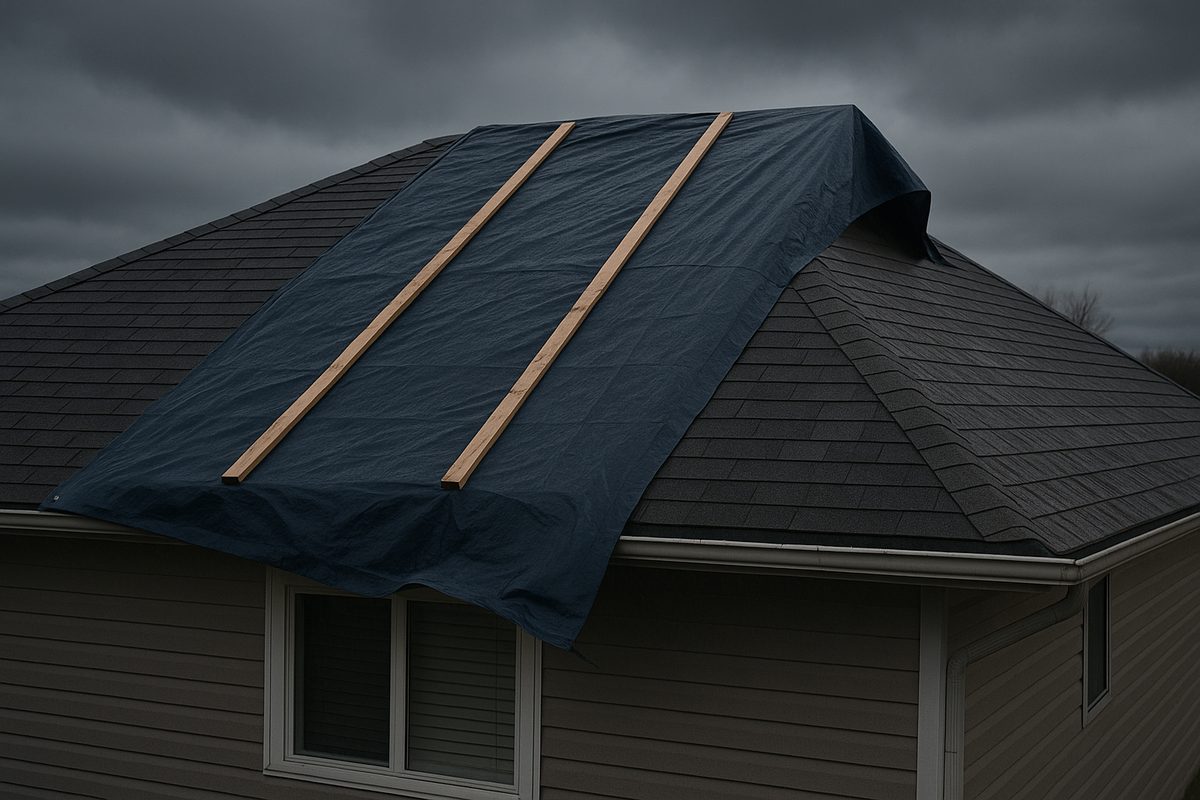
The initial visit is about containment, not craftsmanship. We get a tarp over the affected area, run it over the ridge where the roof geometry allows, and secure it so the next gust does not take it off. A tarp that is not carried over the high point simply channels water under itself.
Where shingles or flashing have been lost outright, we close the opening with temporary material so the deck is protected while the permanent repair is scheduled. All of this is explicitly temporary and we say so. It is triage, and describing it as a fix would be dishonest.
Documentation While It Is Fresh
Before we cover anything, we photograph it. What was damaged, where, and the state it was in immediately after the event. Once a tarp goes on, the evidence of what happened is underneath it, and an adjuster arriving days later sees a blue sheet rather than the damage.
You get those photographs regardless of whether you end up making a claim. If you do claim, that documentation and a written description of the damage is what the process runs on.
Then the Real Assessment
Once the house is dry and the weather allows, we come back and look at the whole roof properly. Storm damage is rarely confined to the obvious hole — wind that lifted one section has usually broken the seal on courses upwind of it, and those shingles will let go in the next blow even though they look flat now.
That assessment tells you whether this is a roof repair confined to one area, or whether the event has shortened the roof broadly enough that roof replacement is the honest recommendation. If hail was involved, the hail damage assessment is a different exercise again, and worth doing on its own terms.
Staying Off the Roof Yourself
Worth saying plainly. A roof that is wet, iced, storm-damaged or structurally compromised is genuinely dangerous, and the instinct to get up there with a tarp during the storm is how people get badly hurt. Water in a ceiling is a repairable problem. A fall is not.
Get containers under the drips, kill the power to any circuit near the water, photograph what you can see from the ground, and call us.
What's Included
- Emergency tarping to stop active water entry
- Wind-lost shingle and blown-off flashing response
- Damage documented and photographed for your insurer
- Temporary work clearly separated from permanent repair
- Follow-up assessment once the house is dry
Other Services We Offer in Edmonton
Emergency Roof Repair Questions
What should I do before you arrive?
Get containers under active drips and move what you can out of the way. If water is anywhere near a light fixture, an outlet or a panel, shut that circuit off at the breaker. Do not go onto a wet, icy or storm-damaged roof yourself. Most serious roofing injuries happen to homeowners doing exactly that.
Will a tarp actually stop the leak?
A properly fitted tarp, run over the ridge and secured against lift, will keep the bulk of the water out until conditions allow a real repair. A tarp thrown over the wet spot and weighted with a brick will not survive the next wind. It is a temporary measure either way, and we treat it as one.
How fast can you get here?
We prioritise active water entry over scheduled work. Response depends on the weather and how many calls a storm has generated across the city. After a major hail or wind event every roofer in Edmonton is triaging. We will give you a realistic time when you call rather than an optimistic one.
Should I call my insurer first or a roofer first?
Stop the water first, and photograph everything before anything is moved or covered. Most policies expect you to take reasonable steps to prevent further damage, so emergency tarping generally works in your favour. Then call your insurer with the documentation in hand.
Is emergency work more expensive?
Emergency response and temporary protection are their own line, separate from the permanent repair that follows. We tell you what the stabilisation costs before we do it, and the permanent repair gets quoted properly once we can see the full extent.
Get a Free Emergency Roof Repair Quote
Book a free quote. We will tell you which one it is, in writing, before you spend anything.