
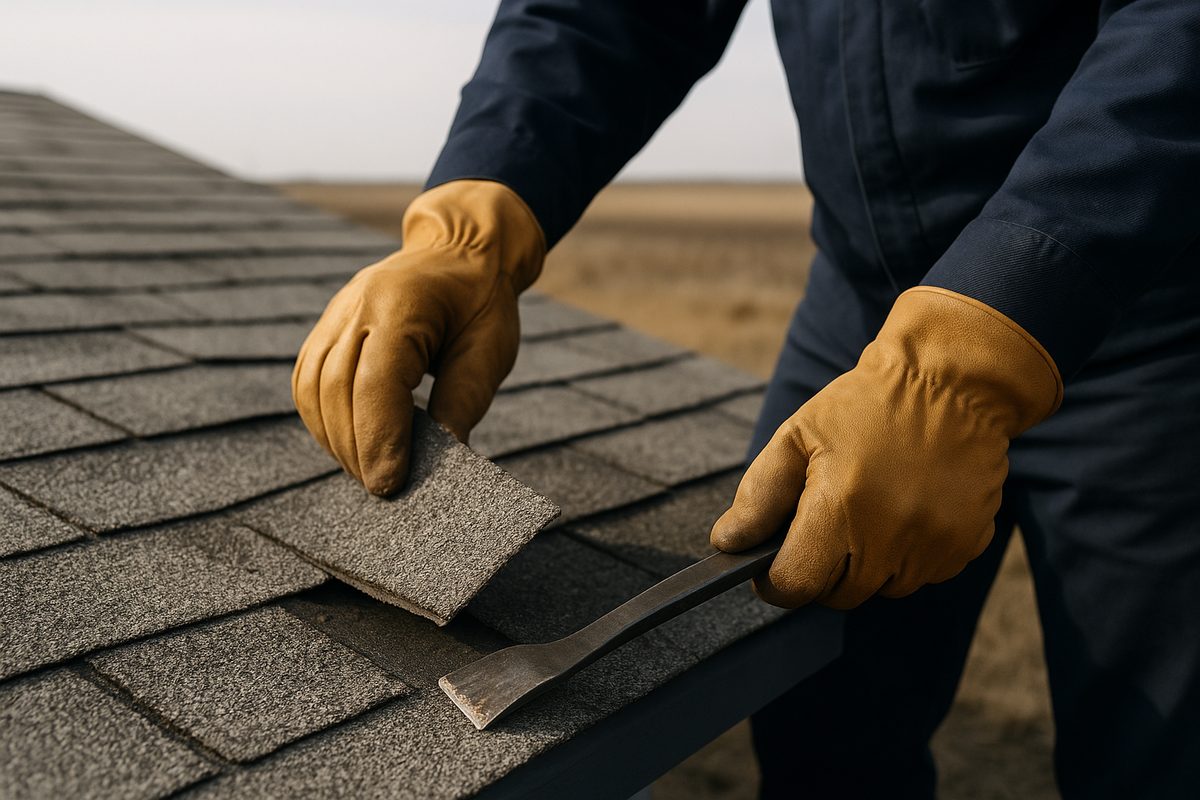
Roof Repair in Edmonton
Targeted repairs that fix the actual source, with a straight answer on whether repair or replacement is the better spend.
Most of the roof repairs Edmonton Roof Pros is called out for are not really shingle repairs. Water gets into a house at the places where the roof stops being a simple slope — a wall intersection, a chimney, a plumbing stack, a valley, a skylight curb. Those are the details that fail first, and they are the details a repair has to get right.
Finding the Actual Source
A ceiling stain marks where water finished, not where it started. Water runs along the underside of the sheathing and down rafters until something stops it, which is frequently metres from the entry point. So we start on the roof and in the attic rather than in the room with the stain.
In the attic, daylight through the deck, darkened sheathing, rusted nail shanks and matted insulation all point back toward where water is coming in. On the roof, we look at what the entry point has in common with the weather that revealed it. A leak that only shows during a driving rain is usually wind-driven water getting behind a flashing. A leak that shows during a thaw after a cold snap is usually ice damming, which is a ventilation problem more than a roofing one.
Repairs We Do Most
Step and counter-flashing where a roof plane runs into a wall is the single most common repair on Edmonton houses, particularly on additions and split-level transitions where two rooflines meet. Plumbing stack boots are a close second — the rubber collar perishes from UV and cold cycling long before the shingles around it are finished.
Valleys collect the most water on any roof and take the most abuse from ice. Chimney flashing on older brick chimneys often needs the counter-flashing re-cut into the mortar joint rather than caulked over, which is what separates a fix that holds from one you will be phoning about again in April.
Wind is the other regular caller. Prairie wind lifts and creases shingle tabs, and a creased shingle is a failed shingle even if it looks flat again afterward. After a bad blow we replace what is damaged and check the courses upwind of it, because the tab that let go is rarely the only one that broke its seal. Where hail is involved, our hail damage roof repair page covers what to look for and how the assessment differs.
Repair or Replace
This is the question worth an honest answer, and it is where roofing companies most often mislead people in both directions.
A roof in good general condition with a single failed detail should be repaired. Full stop. If the field still has granule coverage, the shingles are flexible, and the failure is localised, a repair is the correct spend and it will hold for years.
A roof that has reached the end will not be saved by more repairs. Once shingles are broadly curling, cracking at the edges and shedding granules into the eavestroughs, each repair buys a season and the money is better applied to a roof replacement. We will show you what we are looking at and let you make the call with real information.
If you are not sure which position you are in, book a roof inspection and we will put it in writing.
What's Included
- Leak tracing to the real entry point, not the stain
- Flashing, valley and penetration repairs
- Missing, lifted and wind-damaged shingle replacement
- Deck and sheathing repair where water has already got in
- An honest repair-versus-replace answer before you commit
Other Services We Offer in Edmonton
Roof Repair Questions
What is the most common roof repair?
Flashing, by a wide margin. The shingle field usually outlives the metal detail around chimneys, walls, skylights and plumbing stacks. Most of the leaks we are called to are not a shingle problem at all — they are a failed seal or a bent flashing somewhere water changes direction.
Is it worth repairing an older roof?
It depends on what is failing and how much life is left in the field. A sound roof with one bad flashing is worth repairing every time. A roof with widespread granule loss and curling edges is a roof where each repair buys a season, and that money is usually better put toward replacement. Which of those two you are looking at is exactly what we will put in writing.
Can you repair a leak in winter?
Often yes, as a temporary measure to stop water entering while conditions are wrong for a permanent fix. Shingles do not seal reliably in deep cold and ice makes the work unsafe on steeper pitches. We stabilise it, explain what is temporary, and come back to do it properly.
The ceiling stain is in the middle of the room. Is the hole above it?
Usually not. Water enters at a high point, travels along the underside of the deck or down a rafter, and drips where it finds an obstruction. Chasing the stain straight up is how repairs get done in the wrong place twice. We trace it back to the entry point.
Do you charge for a repair estimate?
No. We come out, get on the roof where it is safe to do so, look in the attic, and give you a written price. If we think you are better off replacing than repairing, we say so.
Get a Free Roof Repair Quote
Book a free quote. We will tell you which one it is, in writing, before you spend anything.